The morning mist lifts off the Kibale canopy, and a pant-hoot rings across the valley. For a primatologist, few sounds are better. Kibale National Park sits just outside Fort Portal in western Uganda. It is also one of the most studied chimpanzee habitats on Earth. This guide covers researcher chimpanzee trekking in Uganda, from permits and approvals to field etiquette. It also shows where university teams can stay while they work.
Researcher Chimpanzee Trekking in Uganda: The Quick Answer
Every researcher can join chimpanzee trekking in Uganda with a standard tracking permit. It costs USD 250 for foreign non-residents. Alternatively, the full-day Chimpanzee Habituation Experience costs USD 300. The Uganda Wildlife Authority (UWA) issues both permits. However, collecting data or samples needs more approvals. In that case, you register with the Uganda National Council for Science and Technology (UNCST). You also apply for a UWA research permit. Most teams stay in Fort Portal, just 30 minutes from the Kanyanchu trailhead.
Why Kibale Leads Researcher Chimpanzee Trekking in Uganda
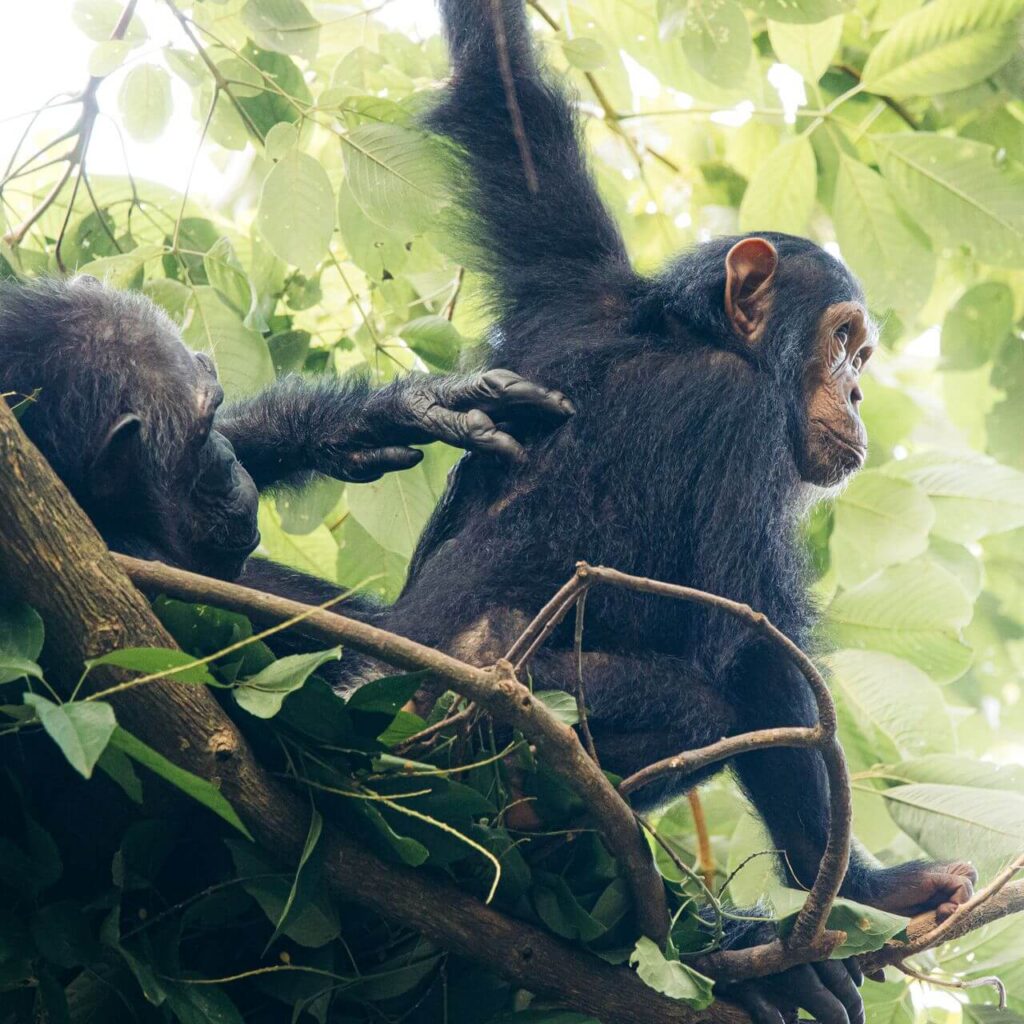
Kibale protects over 1,500 chimpanzees across 795 square kilometres of tropical forest. As a result, it has one of the highest chimpanzee densities in Africa. The park has also hosted primate studies for decades. So, for any researcher, chimpanzee trekking in Uganda starts here. Biology, anthropology and ecology students all find a living classroom in Kibale.
- Makerere University Biological Field Station (Kanyawara): a hub for visiting scientists and field courses.
- Kibale Chimpanzee Project: a long-term study of chimpanzee behaviour, health and ecology.
- Ngogo Chimpanzee Project: home to one of the largest chimpanzee communities ever recorded.
- Other wildlife: 13 primate species, over 375 bird species and nearby crater lakes.
Tourist Trekking vs. Research Access
First, ask one simple question. Are you observing or researching? Your answer decides which permits you need. It also decides how early you should start planning.
Standard Tracking
- One hour with a habituated chimpanzee group
- Best for course field trips
- Needs a UWA tracking permit
- Minimum age is 12
Habituation Experience
- Up to a full day with chimpanzees
- Best for behaviour notes and pilot studies
- Needs a UWA habituation permit
- Minimum age is 15
Formal Research
- Forest time set by your approved plan
- For theses, papers and samples
- Needs UNCST and UWA research approval
- Usually requires a Ugandan host institution
2026 Chimpanzee Trekking Permit Prices in Uganda
- Standard chimpanzee tracking: USD 250 (foreign non-residents), USD 200 (foreign residents), UGX 180,000 (East African citizens)
- Chimpanzee Habituation Experience: USD 300 (foreign non-residents), USD 250 (foreign residents), UGX 250,000 (East African citizens)
Research permit fees are separate, and they change from time to time. Therefore, confirm current rates with UWA and UNCST before you set your grant budget. For a full breakdown of tourist permits, read our Kibale permit prices and booking guide.
How a Researcher Plans Chimpanzee Trekking in Uganda
Formal approvals can take several months. So, a researcher planning chimpanzee trekking in Uganda should start early. Ideally, begin a full semester before your field dates.
- Define your scope: choose between an observation-only course and formal data collection.
- Find a Ugandan affiliate: a local university or field station can host your project.
- Get ethics approval: first at home, then from an accredited Ugandan ethics committee.
- Register with UNCST: this national body approves foreign research in Uganda.
- Apply for a UWA research permit: also add export permits if you plan to move samples.
- Book your tracking permits: reserve 4–6 months ahead in peak season.
- Plan logistics and health: sort out rooms, transport, a yellow fever certificate and a TB test.
Planning a University or Research Group Trip?
Let our team handle rooms, early breakfasts and park transport. Meanwhile, you can focus on the science.
Book Your Team's StayField Etiquette for Every Chimpanzee Researcher
Chimpanzees share about 98.7% of our DNA. Because of this, they can easily catch human diseases. Every researcher on a chimpanzee trekking trip in Uganda helps protect them.
- Keep at least 8 metres from chimpanzees, and wear a mask when asked.
- Stay out of the forest if you feel unwell.
- Avoid flash photography, food near the chimps and litter.
- Groups are limited to 4–6 visitors, so plan how you split your team.
- Always follow your UWA ranger guide.
Where to Base Your Research Team
ATACO Country Resort in Fort Portal is a calm base for visiting academics. You get quiet rooms for writing up field notes and hearty meals before early starts. There is also space for evening team debriefs. In addition, the drive to Kanyanchu, Kanyawara and the crater lakes is short. That makes it ideal for any researcher mixing chimpanzee trekking in Uganda with writing time.
We often host longer stays and group bookings. Browse our rooms and our restaurant and bar. Then check our special offers for group-friendly packages.
Check Availability5-Day Researcher Chimpanzee Trekking Itinerary in Uganda
- Arrival (Day 1): check in at Fort Portal, then hold a team briefing.
- Habituation (Day 2): spend a full day with chimpanzees in Kibale.
- Bigodi (Day 3): survey primates and birds at the wetland sanctuary.
- Field station (Day 4): process data, then explore the crater lakes.
- Tracking (Day 5): join a second observation walk before you leave.
Best Time for Fieldwork in Kibale
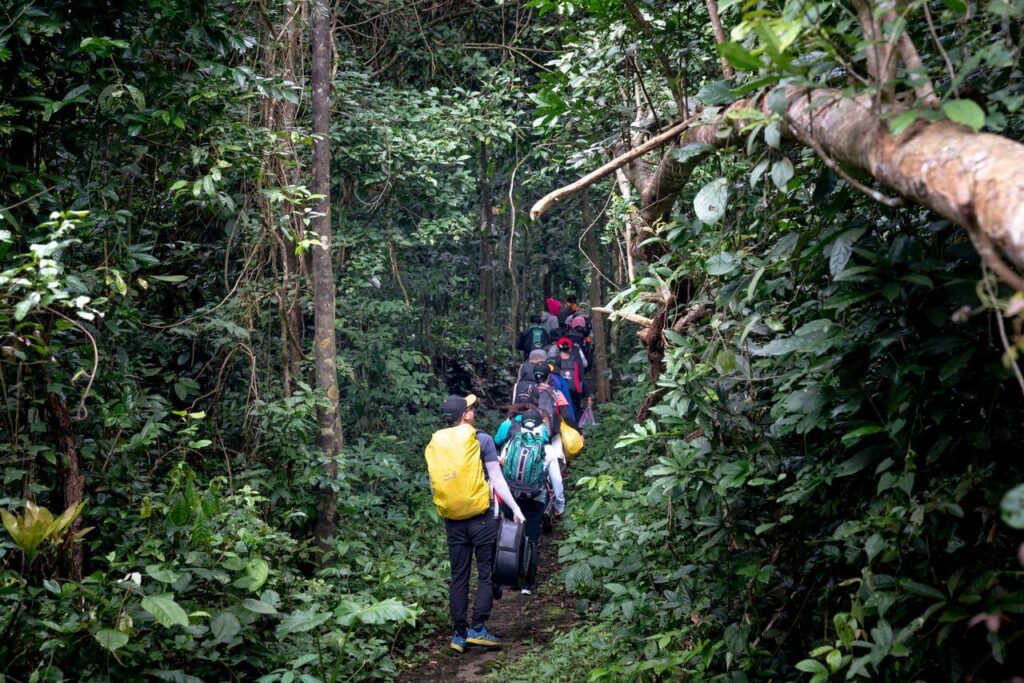
The dry seasons run from June to September and December to February. During these months, trails are firmer and easier to walk. Still, a researcher can enjoy chimpanzee trekking in Uganda all year. In contrast, the wetter months often bring fruiting peaks and fewer visitors. See our guides to the best time to visit Kibale and our rainy season safari tips.
Researcher Chimpanzee Trekking in Uganda: FAQs
Can university students join chimpanzee trekking in Kibale?
Yes. Students aged 12 and over can join standard tracking. Similarly, those aged 15 and over can join the Habituation Experience.
Do I need a research permit just to observe chimpanzees?
No. A standard tourist permit covers observation only. However, a thesis or publication needs UNCST registration and a UWA research permit.
Can researchers collect biological samples in Kibale?
Only with the right research approvals. You also need export permits if samples leave Uganda. Even faeces or urine samples need prior approval.
How far is Kibale National Park from Fort Portal?
The Kanyanchu visitor centre is about 35 km from ATACO Country Resort. The drive takes around 30 minutes, so daily field trips are easy.
Are there discounts for student or research groups?
UWA permit rates depend on residency status. For group rates and longer stays, contact our reservations team.
What happens if we don't find the chimpanzees?
Guides find habituated groups on most treks, but sightings are never guaranteed. Still, the Habituation Experience gives you the longest search window.
Bring Your Research Team to Kibale
Stay at ATACO Country Resort in Fort Portal, your quiet gateway to Kibale's chimpanzees.
Book Your Stay

